

Dog Walking Safety in Winter
Walking your dog in winter comes with its own set of challenges. Shorter days, colder temperatures, icy pavements and darker mornings often mean dog owners are walking earlier, later, or in poor conditions. Many people ask, “when is it too cold to walk your dog?” or “can you walk dogs in the snow?” and the answer depends on preparation, temperature and your dog’s individual needs.
Whether you’re walking dogs in cold weather, navigating snow and ice or heading out after dark, understanding dog winter walking precautions can help keep both you and your dog safe, comfortable and healthy throughout the colder months.
How Cold Is Too Cold to Walk Your Dog?
One of the most common winter questions dog owners ask is: what temperature is too cold to walk a dog?
As a general guide:
- Above 7°C – Safe for most dogs
- 0°C to 7°C – Fine for many dogs, but smaller, short-haired, senior or puppy dogs may feel the cold
- Below 0°C – Extra precautions needed
- Below -7°C – Often considered too cold for most dogs
- Below -10°C – Generally unsafe except for cold-weather breeds
So, what temperature should you not walk your dog in winter? If it drops below -7°C, or there’s ice, snowstorms or strong winds, it’s best to shorten walks or find indoor alternatives.
Always watch your dog rather than the thermometer. Shivering, lifting paws, slowing down or refusing to walk are all signs it may be too cold.
Walking Dogs in Winter: Key Safety Risks
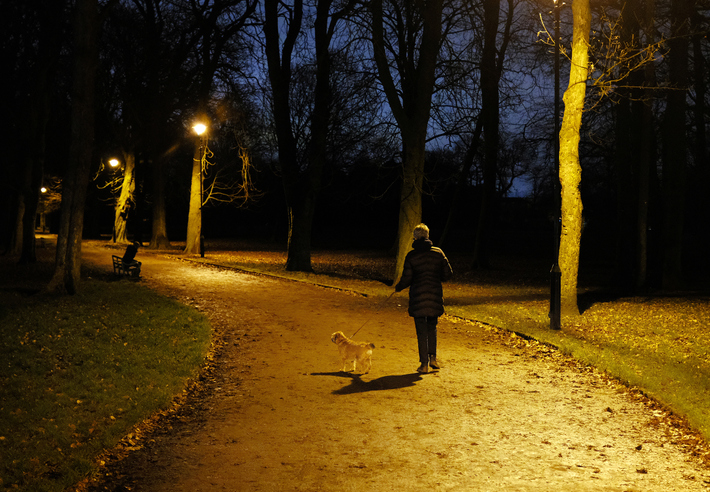
As autumn moves into winter, many dog owners find that walking their dog in the dark becomes unavoidable. Short daylight hours mean early morning or evening walks are common and winter darkness combined with cold weather brings additional risks.
Dogs can see better in the dark than humans, but unfamiliar shapes, shadows and noises may change their behaviour. Cold temperatures can also affect joints, paws and energy levels, especially for older dogs.
Tips for Walking Your Dog in Winter
Use these tips to keep winter walks safe and enjoyable:
- Keep your dog on a lead in icy or dark conditions
- Walk against traffic so you can see approaching vehicles
- Stick to familiar routes to avoid hidden hazards
- Shorten walks in freezing temperatures
- Choose daylight walks where possible
- Avoid icy pavements and untreated paths
- Dry your dog thoroughly after every walk
- Increase weekend walk length to make up for shorter weekday walks
Knowing how long to walk your dog in winter is important – quality matters more than duration during colder months.
Safety and Care Advice
Paw Care in Winter
Snow, ice, grit and road salt can irritate paws and cause painful cracking.
- Rinse paws after walks
- Dry thoroughly, especially between toes
- Use paw balm for protection
- Consider dog boots if your dog is sensitive to ice
This is especially important if you’re wondering “are dogs’ paws okay in the snow?”, they can be, but protection helps.
Coats and Warmth
Smaller breeds, short-haired dogs and senior dogs often struggle more in cold weather.
- Use an insulated, waterproof coat
- Ensure coats fit properly and don’t restrict movement
- Pay attention to wind chill, not just temperature
If you’re asking “do dogs need coats in the winter in the UK?”, many do, particularly during early morning and evening walks.
Visibility in the Dark
Winter walks often mean low visibility.
- Use reflective harnesses or coats
- Attach LED lights to collars or leads
- Wear reflective or hi-vis clothing yourself
- Use a head torch to see uneven ground
Reflective gear keeps you visible to cars, cyclists and other dog walkers.
Hydration Still Matters
Cold weather doesn’t eliminate the need for water.
- Offer fresh water after every walk
- Snow should not replace drinking water
- Dry mouths and heated homes can increase dehydration
Can You Walk Dogs in the Snow?
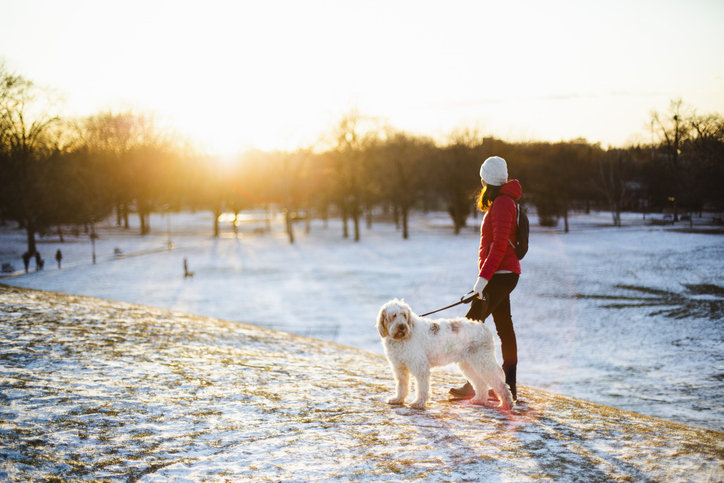
You can walk your dog in winter and in the snow, as long as you take precautions.
Snow can be enriching and fun for dogs, but icy conditions, salt exposure and cold temperatures mean walks should be:
- Shorter
- Slower
- Carefully monitored
If conditions are unsafe, replace walks with indoor enrichment or garden play.
FAQs
Are dogs’ paws okay in the snow?
Yes, but snow, salt and ice can cause irritation. Rinse and dry paws after walks and use balm or boots if needed.
How do you know if your dog is cold?
Signs include shivering, lifting paws, slowing down, whining, or trying to turn back home.
Do dogs need coats in the winter in the UK?
Many dogs do, especially small breeds, short-haired dogs, puppies and seniors.
Do dogs get a winter coat?
Some breeds grow a thicker undercoat, but many domestic dogs don’t develop enough insulation for cold weather.
At what temperature does my dog need shoes?
Dog boots are helpful below freezing, on salted pavements, or for dogs with sensitive or injured paws.
Are dogs cold if their ears are cold?
Cold ears alone aren’t always a problem, but combined with shivering or reluctance to walk, it can indicate your dog is too cold.
Safety First: Adjusting Walks in Winter
If winter weather means you need to reduce walks during the week, don’t worry. You can:
- Enjoy longer daylight walks at the weekend
- Use the garden for supervised play
- Ask a neighbour or friend to walk your dog in daylight
- Consider a professional dog walker
Remember, walking your dog in winter should always prioritise safety over routine. Shorter, safer walks are better than risking injury or illness.
Your dog doesn’t need perfect weather, just thoughtful care, preparation and your attention.