
Dog pregnancy: A simple guide for dog owners
Dog pregnancy: A simple guide for dog owners
At Barking Mad, we love every stage of a dog’s life and that includes the exciting arrival of tiny paws. Dog pregnancy can be an incredible experience, but it can also raise a lot of questions for owners.
From understanding how long a dog is pregnant to recognising early dog pregnancy signs and knowing what to expect during labour, this guide covers the full journey of dog pregnancy in a clear, simple way.
How to tell if your dog is pregnant
One of the most common questions owners ask is how to tell if your dog is pregnant. Unlike humans, there isn’t a reliable pregnancy test for a dog that you can use at home, so pregnancy usually needs to be confirmed by a vet.
If you believe your dog may be pregnant, your vet can confirm this in several ways:
- Hormone blood test (around 25–30 days after mating)
- Ultrasound scan (from around 25 days)
- Physical examination or abdominal palpation
- X-ray later in pregnancy to count puppies
Because these tests are time sensitive, your vet will usually ask for the approximate date of mating.
Can a dog get pregnant not in heat?
Dogs can only become pregnant when they are in heat (also known as season or oestrus). Unspayed female dogs usually come into heat about twice a year and the cycle typically lasts around three weeks.
However, sperm can survive in a dog’s reproductive system for up to a week, meaning pregnancy can occur even if mating happened several days before ovulation.
What age can dogs get pregnant?
Most female dogs have their first season between 6 and 24 months of age, although some breeds may start slightly earlier or later.
Even though a dog can become pregnant during her first season, most vets recommend waiting until a dog is fully grown and mature, usually at least 2 years old, before breeding.
How long is a dog pregnant?
One of the most searched questions about dog pregnancy is how long the gestation for a dog lasts.
The average period of dog pregnancy is around 63 days from conception. However, the full gestation period typically ranges between:
- 56 to 70 days depending on when fertilisation occurs
Because the exact day of conception is often difficult to pinpoint, vets usually estimate due dates based on the mating date and ultrasound results.
Dog pregnancy timeline
Below is a simplified overview of the dog pregnancy timeline:
Week 1–2
Fertilisation occurs and embryos begin developing. Most dogs show no visible symptoms.
Week 3
Hormonal changes begin. Some dogs may experience mild morning sickness.
Week 4
The embryos implant in the uterus. Your vet may be able to confirm pregnancy with an ultrasound.
Week 5
Puppies begin developing rapidly. Your dog’s abdomen may start to enlarge slightly.
Week 6
Increased appetite is common and nipples may become larger and darker.
Week 7
Hair may thin around the nipples and the abdomen becomes more noticeable.
Week 8
You may be able to feel puppy movement in the abdomen. Nesting behaviour may begin.
Week 9
Your dog prepares for labour. Appetite may decrease and restlessness or nesting may increase.
Dog pregnancy symptoms
Signs and symptoms of dog pregnancy often appear gradually. Early dog pregnancy signs can be subtle, while later symptoms are much easier to recognise.
Signs of early dog pregnancy
During the early weeks, you may notice:
- Slightly enlarged or pink nipples
- Changes in appetite
- Mild vomiting (similar to morning sickness)
- Increased affection
- Clear vaginal discharge
- Lower energy levels or tiredness
Later pregnancy symptoms
As pregnancy progresses, the signs become more obvious:
- Weight gain
- Enlarged abdomen
- Increased appetite
- Darker or more prominent teats
- Milk production in late pregnancy
- Behaviour changes
- Visible puppy movement in the abdomen

Signs a dog is going into labour soon
As your dog approaches the end of her pregnancy, several signs may indicate that labour is close.
Common signs a dog is going into labour soon include:
- Nesting behaviour
- Restlessness or pacing
- Loss of appetite
- Drop in body temperature
- Panting or shaking
- Increased clinginess or seeking quiet spaces
These signs usually appear within 24 hours before labour begins.
Dog labour: what to expect
Many owners wonder how long dogs are in labour for and what happens during the birth process.
Labour in dogs typically lasts between 3 and 12 hours and happens in three stages.
Stage 1: Early labour
This stage can last up to 24 hours.
Your dog may:
- Nest or prepare a birthing area
- Refuse food
- Appear restless
- Experience contractions
- Have a drop in body temperature
Stage 2: Delivering the puppies
This is when active pushing begins.
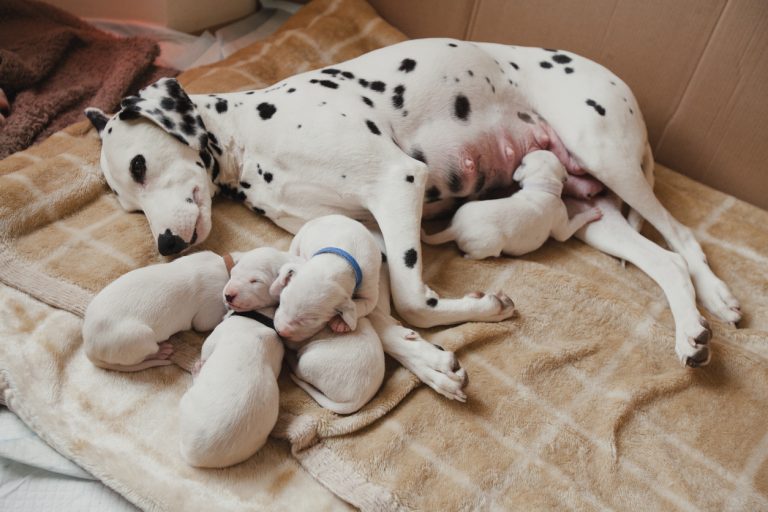
- Puppies are usually born every 30–60 minutes
- Each puppy is delivered in a fluid-filled sac
- The mother will usually break the sac and clean the puppy
If your dog strains for more than two hours without producing a puppy, contact your vet immediately.
Stage 3: Passing the placenta
Each puppy has its own placenta, which usually passes shortly after the puppy is born.
Your dog may chew the umbilical cord and clean the puppy instinctively.
Preparing for your dog’s labour
Preparing in advance can make the process smoother for both you and your dog.
Create a whelping area
Provide a quiet, private space where your dog feels safe giving birth.
A simple whelping box can include:
- A large cardboard or plastic box
- Puppy pads or newspaper lining
- Clean bedding
- Familiar toys or blankets
Have essentials ready
Before labour begins, it helps to prepare:
- Clean towels
- Nail scissors
- A thermometer
- Microwavable heat pads
- Your vet’s emergency contact number
- Transport in case of complications
Dogs often give birth during the night, so being prepared can reduce stress if labour begins unexpectedly.
Behaviour changes during dog pregnancy
Pregnancy can affect a dog’s behaviour in several ways. Some dogs become more affectionate, while others may become quieter or more protective.
You may also notice increased barking during pregnancy. Hormonal changes, discomfort from weight gain or protective maternal instincts can all cause a pregnant dog to vocalise more.
Monitoring your dog closely and ensuring regular veterinary care can help address any concerns.
Breeding considerations for dog owners
Breeding from your dog is a significant responsibility and should always be discussed with your vet first.
Important factors to consider include:
- Ensuring vaccinations are up to date
- Waiting until your dog is fully mature (usually 2+ years)
- Avoiding breeding older dogs
- Understanding breed-specific health screenings
- Planning appropriate care for the puppies
Organisations such as the Kennel Club can provide additional advice on responsible breeding.
Preventing dog pregnancy
If you do not intend for your dog to have puppies, neutering (spaying) is the most effective way to prevent pregnancy.
Spaying prevents reproduction and can also reduce the risk of certain health issues later in life. Your vet can help you decide the best time for the procedure.
Planning ahead for puppies
If you are welcoming puppies into your home, it’s worth thinking ahead about future care arrangements.
At Barking Mad Dog Care, our experienced host families provide loving home-from-home dog sitting while owners are away. If you’re planning for a new puppy in your household, it can help to register early so suitable care is available when you need it.
Dog pregnancy FAQs
Can you feel puppies in a dog’s belly?
In later pregnancy (usually after week 7), you may be able to feel puppies moving in the abdomen. However, it can be difficult and should be done gently. Your vet can confirm pregnancy safely through ultrasound or examination.
How many puppies can a first time dog have?
The number varies depending on breed and size. Smaller breeds may have 1–4 puppies, while larger breeds can have 6–12 or more. First litters are often slightly smaller.
How long after a dog gives birth can you touch the puppies?
You can usually handle puppies shortly after birth if the mother is comfortable with it. However, it’s best to keep handling minimal during the first few days to avoid stressing the mother.
What does a 1 week pregnant dog look like?
At one week pregnant, there are usually no visible physical changes. The embryos are still developing and the pregnancy is not externally noticeable.
What should be in a dog’s whelping box?
A whelping box should include:
- Clean bedding or blankets
- Puppy pads or newspaper
- Towels
- A heat source
- Enough space for the mother to move comfortably
What does a dog’s belly feel like when pregnant?
As pregnancy progresses, the abdomen may feel firmer and slightly swollen. Puppy movement may sometimes be felt in later stages.
Is it normal for a dog to pant after giving birth?
Yes, panting can be normal after birth due to exhaustion, hormonal changes, and the effort of labour. However, if panting seems excessive or your dog appears distressed, contact your vet.
Should I stay with my dog when she gives birth?
Yes, it’s important to stay nearby during labour. While most dogs give birth naturally without intervention, you should be available in case complications occur.
What’s the purpose of a whelping box?
A whelping box provides a safe, comfortable and contained space for a dog to give birth and care for her puppies.
What does morning sickness look like in dogs?
Morning sickness in dogs may involve mild vomiting, reduced appetite or lethargy during the early weeks of pregnancy. Not all dogs experience this.
What not to do when a dog is pregnant?
Avoid:
- Over-exercising your dog
- Giving medication without vet advice
- Sudden diet changes
- Stressful environments
- Handling the abdomen roughly
Always seek veterinary advice if you are unsure about your dog’s health during pregnancy.
Every puppy is different, and we would need to make sure that we have suitable host availability for your chosen dates. With this in mind, we would recommend that you don’t leave registering your puppy with Barking Mad’s dog sitting service until the last minute. Why not find your local branch and have a chat to them about your new furry friend today?
Please note: Barking Mad, the UK’s leading home dog boarding provider, assumes no liability for the content of this page. This advice is not a substitute for a proper consultation with a vet and is only intended as a guide. Please contact your local veterinary practice for advice or treatment immediately if you are worried about your pet’s health – even if they are closed, they will always have an out of hours service available.